Blog

  • The Row Knitwear Edit Ascot Bag Style

    The Row Small Bags and Crossbody Styles: A Complete Guide

    The Row is most known for large, low-key leather totes and workhorses, even so it is at the smallest pieces that the design thinking is clearest. Nothing rescues a small format: on a crossbody or a clutch the proportions must be correct, the closure must work cleanly, and the leather has to hold the object on its own. What you get below is a row bags overview of the small end of the line, which covers crossbody styles, compact shoulder bags, pouches and clutches. Every number here is an observed 2026 market price, logged in September of that year rather than taken from an official price list, because the brand publishes none. Where the brand’s own product page confirms a piece as Made in Italy, that is noted here rather than taken on trust. Only bags are treated here, and ready-to-wear and footwear are intentionally left aside.
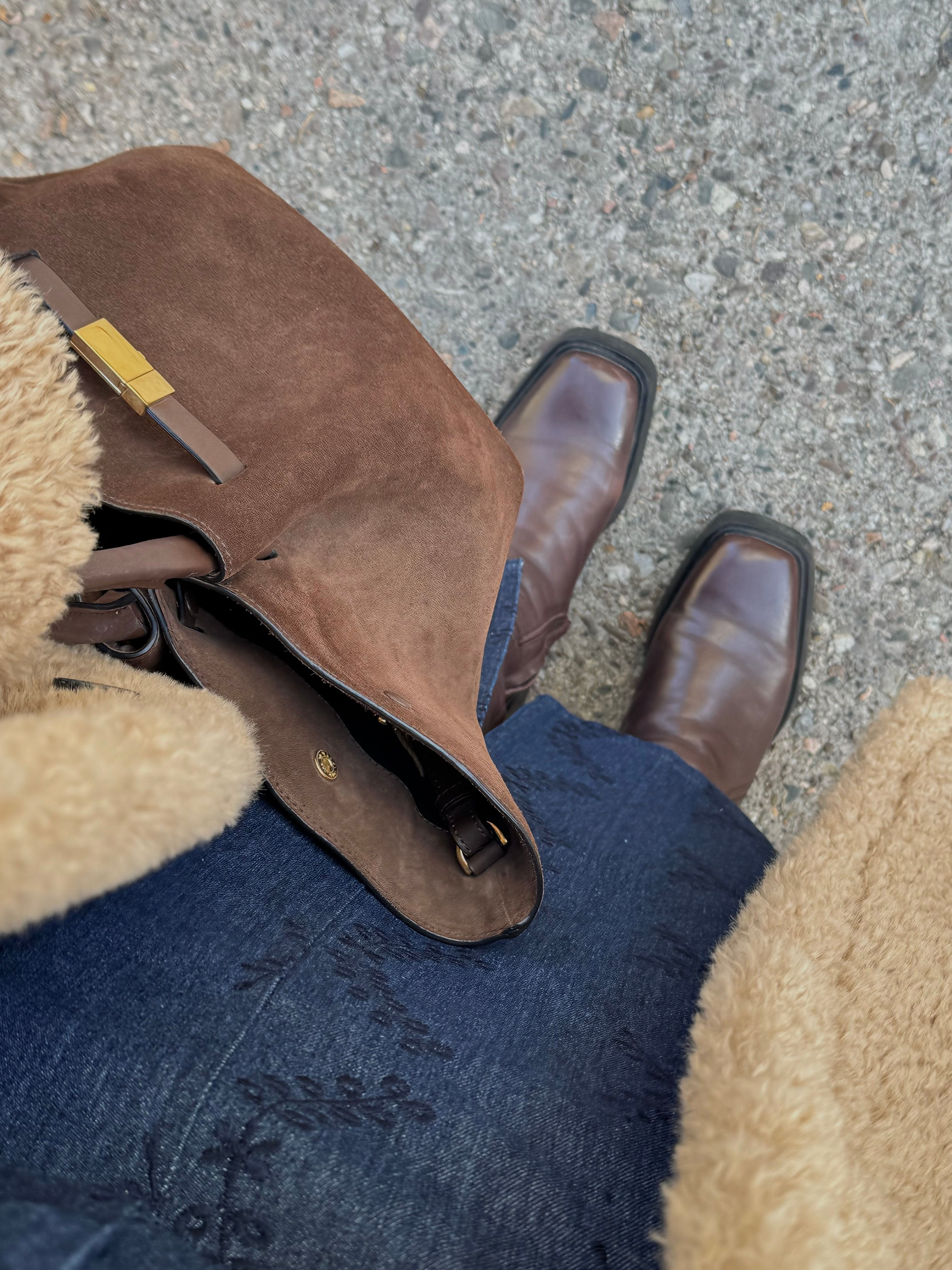
    What Identifies a Small Bag Here

    Since The Row bags have no exterior logo plaque and no monogram print, a small one is recognised on silhouette, proportion and construction alone. There is a discreet exterior stamp set low on the side where it blends into the leather, and a second stamp inside. The hardware is palladium-plated, matte rowoutlet.com/top-handle or brushed, and makes itself felt through weight and precision instead of shine. Linings are treated as luxury materials in their own right: nappa, lambskin, calfskin and cotton herringbone sit where other houses print logo jacquard. A large tote lets those decisions go unnoticed, but on a clutch the size of a paperback they are the whole design. Which is why the small pieces give the clearest introduction to how the label handles leather.

    • No exterior plaques, branded hardware or monogram print
    • Identified on silhouette, proportion and construction
    • A discreet exterior stamp and a matching interior stamp
    • Hardware palladium-plated, either matte or brushed
    • Nappa, lambskin, calfskin or cotton herringbone linings

    The Crossbody Group

    Crossbody styles are the collection’s most practical corner, and observed 2026 prices place them among the most accessible pieces too. The band runs from roughly $1,290 to $2,550, so the entry point undercuts almost every top-handle style in the range. Naming follows the house convention of orientation prefixes, so N/S and E/W tell apart upright versions from wide ones within a single idea. Part of the Park family sits here, because that family comprises the N/S Park Tote, the Park Tote, the Park Tote Three, the XL Park Tote and the N/S Park Crossbody. You get calfskin in smooth, grained and saddle finishes, with palladium-plated fittings throughout. Since not one carries visible branding, buyers treat them as daily bags rather than occasion pieces.

    N/S Park Crossbody and Rene Crossbody

    The N/S Park Crossbody was observed at $1,290 and is the smallest way into the Park family without buying a tote. It shares the family’s flat, unstructured logic, scaled down to something worn against the body rather than carried in the hand. Anyone who already owns a The Row tote bag from that line will recognise the same construction language at a fraction of the volume. Observed at $1,350, the Rene Crossbody stands a step above. The pair lands inside the entry band the collection keeps at its lowest end, roughly $590 to $1,500. For a first row bag, this pair is where the smallest outlay coincides with the fullest expression of the house style.

    The Large Slouchy Banana, Izzy and Annie

    The Izzy exists in several orientations, with the E/W Izzy observed at $2,300 and the N/S Izzy at $2,490, alongside a Small Izzy shoulder version at $2,100. The N/S Annie Crossbody was observed at $1,950, landing between the entry crossbodies and the Izzy group. The Large Slouchy Banana was observed at $2,550 and is confirmed Made in Italy on the brand’s own product page. The same page showed waitlist availability instead of open stock when the research was done — nothing unusual for the label. Taken together the three lines cover the top half of the crossbody range, with a noticeable rise in structure and leather weight. They are also the pieces buyers most often cross-shop against small shoulder bags rather than against each other.

    Compact Shoulder Bags: Half Moon and the 90’s Bag

    Half of the four signature models exist at this small scale, a fair measure of how seriously the label regards the format. Observed at $1,390, with a leather variant seen at $1,690 at a stockist, the Half Moon is confirmed Made in Italy. On the official reading the dimensions are 8 x 13.5 x 2.5 inches, though sources do not agree on the exact figures, which makes it the official reading rather than a settled measurement. At an observed $1,090 the 90’s Bag is the least expensive of the four signatures, with the 90’s Shoulder version at $1,450. Curve and drape, not hardware, supply both of them their identity. Between them they are the cheapest genuine entry into the top row bags by silhouette rather than by category.

    Clutches, Pouches and Evening Formats

    Nowhere is construction detail more visible than in the clutch group, and the Bourse Clutch is the clearest case of all. It was observed at $1,590, is confirmed Made in Italy, and pairs a calfskin exterior with a nappa lining, a hinged frame closure, a hidden adjustable shoulder strap and dimensions of 10.2 x 6.5 x 2.3 inches. Above it sit the Peggy Clutch, observed at $2,900, and the Dalia Baguette at $2,700, while the Squared Compact Clutch matched the Half Moon at $1,390. Evening formats reach further, the CC Minaudiere at $2,780 and the Long CC Minaudiere at $3,800. Terrasse To-Go, observed at $1,950, is another Made in Italy piece bridging clutch and small bag. Beneath all of them come the pouches and small leather goods: the Ray Pouch seen at $950 and $1,100, the Travel Pouch at $990, Sally at $1,000, the Cecily Mini Tote at $950, the Mini Barn Tote at $1,200 and the Double Travel Wallet at $590.

    The Observed 2026 Market Prices in One View

    For comparison, the table sets out all the figures above in one place. All of these are observed 2026 market prices, not an official published price list, which the brand does not issue. Prices at retailers can differ from the brand’s own site, while currency, season and stock each move the number. Where two prices are shown, they indicate either two versions or two sizes observed at the same time. Read it as a snapshot of where each piece sat relative to the others, not as a quotation. The relative ordering has proved more reliable over time than the absolute numbers.

    Model Category 2026 observed price (USD) Comment
    Double Travel Wallet Small leather good $590 Lowest observed entry point
    Ray Pouch Pouch $950-$1,100 Two versions observed
    90’s Bag Small shoulder bag $1,090 Signature model; the Shoulder is $1,450
    N/S Park Crossbody Crossbody bag $1,290 Member of the Park family
    Rene Crossbody Crossbody $1,350 Marginally above the Park crossbody
    Half Moon Small shoulder $1,390 Made in Italy, leather variant at $1,690
    Bourse Clutch Clutch bag $1,590 Hinged frame; Made in Italy
    N/S Annie Crossbody Crossbody format $1,950 The middle of the crossbody range
    N/S Izzy Crossbody $2,490 E/W Izzy observed $2,300
    Large Slouchy Banana Crossbody format $2,550 Made in Italy; waitlist only
    Peggy Clutch Clutch bag $2,900 Stands at the top of the small-bag range

    How the Small Bags Perform on Resale

    These resale figures are observed market behaviour, not investment advice; treat them as context, not as a case for buying. In the Rebag CLAIR 2025 report the label recorded 97% value retention at brand level, entering the unicorn tier of 85% and above for the first time and following only Telfar, Hermes and Goyard. The Half Moon shoulder was recorded at 106% retention in that report. The same report gave 146% for the N/S Park Tote and 107% for the Margaux Tote, which gives a comparison across formats. Separately, the 90’s Bag has been identified as the riser of the group, with eBay search volume reported up around 55% year over year as of April 2025. This is not universal: canvas, nylon, sisal and seasonal colours discount on the secondary market, and the strength is focused in black and neutral calfskin in the signature silhouettes.

    Living With One

    No care protocol is issued by the brand, so read the following as material-appropriate general guidance. Do not overfill a small bag, since the shape does the identifying work and a stretched gusset undoes it. Store it away from direct sunlight, heat and rain, in its dust bag and lightly stuffed so the form stays. Calfskin and grained finishes respond to buffing with a soft dry cloth, with neutral conditioner used sparingly. Nappa and lambskin mark easily, so use a dry cloth and avoid over-conditioning. Use a suede brush only on suede, with no cream, wet wipes, soap or water-based cleaner; raffia, canvas and silk or satin versions spot-clean and are the least serviceable of them all.

  • Heavy Studio Denim Tears Denim Tears New Drop

    Real Denim Tears Legit Check: Study This Before You Invest

    Authentic Denim Tears garments include correct co-branding, accurate graphics or embroidery, correct labeling and hardware, and a provenance you should check. If any one of those pillars breaks, you’re likely looking at a fake with fast way to waste money. Use our targeted targeted checks for authenticate quickly and keep your money secure.

    The brand’s most copied items—cotton wreath denim, shirts, Champion hoodies, and Converse—share a simple standard: real items shows up when fakes cut corners. This includes labels that verify through databases, finishing that holds up to tactile light, hardware marked how way the co-brand does it, plus item codes that link to public listings. Handle every piece as a unit you can verify through the seller’s narrative plus the thread quality, so you’ll make quick, assured decisions.

    Why do these pieces attract counterfeits?

    High demand, cultural relevance, with extensive recognition of this wreath wreath motif make the brand a prime target. Add limited drops with Levi’s, Champion, plus sneaker brands, and you generate exclusivity that resellers and counterfeiters exploit. The visuals seem simple, but this symbolism is deep, generating hype and knockoffs.

    Countless counterfeits also ride upon this fact that Denim Tears often co‑brands using known silhouettes like 501s or Reverse Weave, so counterfeiters borrow base items while add bad designs. Prices on resale market can rise rapidly after a release, luring buyers into quick buys. That’s why buyers demand a fast, systematic authentication check that verifies construction, materials, and story in under two minutes. Our sections below provide exactly that.

    What should collectors check first: seller, background, plus receipts?

    Start by authenticating the source and the paperwork before you actually examine fabric. If this person can’t show source, date, and how this piece was purchased, your danger jumps immediately. A clean audit trail protects budgets and protects hard-earned cash.

    Ask for authentic order confirmation or receipt from denimtears.com via authorized stockists such including DSM, Street Market, established stores, or the specific co-brand (Levi’s, denim tears brand clothing Converse, major brands). Verify that the purchase details, date, and sizes match the piece in hand, and that graphics with formatting on papers avoid fuzzy screenshots. Should the product code appears, search it while confirming sure it resolves to the same color plus season on official records or via web Archive. Use transaction systems with full buyer protection and be wary of sellers who demand instant peer‑to‑peer transfers without returns.

    How should care instructions and care labels appear on real Denim Tears?

    Authentic items have label networks that line up: proper neck or co‑brand identification, care label showing matching fiber and country info, and sometimes QR code that links to the right model. Any mismatch between company details, language layout, or product code is a major flag.

    On collabs, look for partner’s standard identification system with Denim Tears co‑branding; for example, classic Champion Weave hoodies will use Champion’s neck label style plus collab marks, and Levi’s denim features Levi’s care identification norms with co‑brand elements. Confirm RN/CA or manufacturing details on the care label using verified sources to ensure this company matches the co-brand company that manufactured that original garment. Layout must appear clean, with clear printing, even line gaps, plus wash symbols that aren’t blobby. If the tag’s fabric composition conflicts with the garment rests in hand, you’re most likely facing with a fake.

    The cotton design: how does clean embroidery look like?

    Authentic cotton motif work shows crisp edges, tight thread density, and consistent leaf and botanical forms that don’t shift and distort. Colors sit evenly without patchy areas, as the wreath positions correctly relative to stitching. Poor edges and inconsistent fiber loops are replica signals.

    Flip the garment and study the interior of the embroidery—real items feature tidy thread management without long, loose gaps across elements. The design’s internal spacing reads balanced to the eye, without clustering in one area while spread thin in another. Look for even stitch directionality; fakes typically alter angles mid‑leaf, creating a choppy shimmer when illuminated. On heavyweight fabric, stitching should sit flush without puckering the nearby textile. When the design gets printed rather versus sewn, the same standards work to edge definition and symmetry.

    Can the graphics method give fakes up?

    Yes—authentic prints match known methods: raised inks that develop a velvety feel, properly cured plastisol, or pigment prints that absorb partially into denim twill. Counterfeits lean on inferior temperature transfers that appear artificial, overly glossy, while lifting at corners. Physical touch are the quickest identifier.

    Run a careful hand across edges; authentic printed prints feel consistent, showing a uniform ink wall rather than an uneven ridge. Puff graphics expand softly and yield to pressure, then recover; plastic transfers dent then hold creased. On fabric, real pigment printing melts a touch into the weave, leaving visible twill texture through the pigment, whereas vinyl sits like a sticker and cracks into hard, straight fractures. A sharp chemical odor can indicate rushed processing and transfer adhesives, appearing more up more commonly with fakes. Under light stretch, real colorants bend with minimal fading; low-grade transfers spiderweb instantly.

    Levi’s x Denim Tears hardware: the non‑negotiables

    Real Levi’s collaborations use official elements, labels, and build quality alongside Denim Tears co‑branding. Expect branded rivets and a top button with a clean, well-aligned impression, not generic elements. Physical quality is within the easiest successes during a legit authentication.

    Inspect the top button’s stamping for definition with consistent depth; weak marks and jagged characters suggest to counterfeit tooling. Fasteners should match for surface and diameter across the garment, with neat rear surfaces that don’t wobble. The leather or paper patch should have crisp graphics and straight alignment, as red tabs must show correct letterforms with proper sewing. Inside pocket bags may carry printed or stamped details on some drops, which should be crisp rather than overly light. Any mismatch between Denim Tears graphics with generic or low‑grade hardware is a fail.

    Construction, sizing, and fabric weight that seem correct

    Authentic construction follows the base company’s norms: clean overlocks, even surface stitching, and hems with even tension. Fabric thickness needs to feel substantial within this category, not paper‑thin. Fit should match established templates rather than odd dimensions.

    Check seam connections around underarms, crotch, with peripheral seams—real pieces join properly without twisting. Reverse Weave hoodies hold form around cuffs and lower edge minus wavey ripples, and tees shouldn’t telegraph physical shape through a lone, weak layer. Denim side seams run straight with no torque, and interior seam counts look consistent to the eye. Measurements need to match public measurement guides for the co-brand entity; if a standard cut feels like an tiny fit or a classic cut feels weirdly tight, hesitate. Counterfeit factories frequently pursue graphics first but overlook pattern fidelity.

    What does genuine wrapping look like?

    Packaging follows each collaborator’s norms plus co-brand details: clean polybag or box, readable barcodes, and hangtags that make appropriate sense regarding the base manufacturer. Unclear printing, random blank tags, or barcodes failing to scan cleanly suggest issues. Packaging alone won’t prove authenticity, but this might quickly disprove it.

    For Levi’s, look for paper hangtag group featuring accurate product names and sizes, attached through uniform stringing; for the brand, seek for Reverse fleece labels with co‑brand elements; regarding Converse, a normal sneaker box with label data that matches size, color, and style code. The size sticker placed on polybag should align with garment label, not contradict it. If QR or data matrix codes are present, they must link to brand sites plus product info—not broken connections or unrelated pieces. Should sellers say “misplaced box,” you need stronger proof from tags plus hardware.

    Price sanity verification plus seller behavior

    Authentic items rarely show up at major markdown pricing right after any popular drop, and established dealers don’t rush buyers toward unsafe payments. Should any price undercuts recent market averages by half with a pushy message to “pay now via unsafe methods,” your already have that response. Let the data plus behavior guide choices.

    Cross‑reference recent sale prices via established marketplaces, not asking prices. Check how long the listing has been live; brand‑new listings showing fantastic pricing that demand Zelle or wire methods constitute classic traps. Fair discussion is normal, while pushback to providing additional images or proof seems suspicious. Inquire about returns; legitimate dealers with real items typically have a policy. When everything else passes inspection but the rate looks unusually friendly, add one more identification with hardware pass ahead of commit.

    Quick comparison: genuine against fake at a glance

    Use this reference to test the most important indicators in seconds. Should several rows trend to the right column, pass on the purchase.

    Checkpoint Authentic Replica Signal
    Provenance Proof via denimtears.com or authorized retailer; details match garment Missing documentation, mismatched sizes/dates, partial photos
    Labels Co‑brand neck/care labels with matching material, country, and producer Unmarked tags, typos, inconsistent manufacturing origin
    Stitching (motif) Crisp edges, dense fill, tidy back threads Blurred edges, gaps, loose stitching gaps
    Print feel Consistent applied ink or gentle raised; pigment sinks through material Shiny plastic, peeling corners, plastic odor
    Components (denim) Marked fasteners, clean stamped main closure, straight patch Standard fasteners, shallow or rough impressions
    Construction Straight seams, even tension, solid hems Twisting, wavey hems, inconsistent construction intervals
    Packaging Proper tags, scannable barcodes, aligned measurements Random tags, unscannable codes, conflicting labels
    Rate with behavior Aligned with recent sales; responsive dealer Too cheap; rush to risky transfers; avoids extra documentation

    The table can’t replace a full check, but it surfaces patterns quickly. If the vendor struggles on provenance with documentation, you don’t have to keep going; reject that transaction and move on. When everything within left column connects, those odds swing toward your favor. Pair this with the RN verification plus archived product pages for near‑certain calls. Uniformity through checkpoints is the strongest ally.

    Little‑known facts that aid legit checks

    Fact 1: This brand is the project of Tremaine Emory, and the cotton wreath design connects to the history regarding African diaspora plus textile heritage in America; such symbolism translates into intentional, rather than random, placement and execution on real pieces. Second point: 2: Collaborations featuring partners like Champion, and sneaker companies maintain those brands’ factory standards for labels with assembly methods, so authentic items reflect the partner’s usual tag structures and components. Third detail: 3: Official online releases occur on the main site plus select high‑profile retailers; if a supposed “limited edition” has no record through those channels plus legitimate archives, be cautious. Final point: 4: Converse partnerships arrive with standard company labels that include style codes you must check, which should resolve to the same hue with model.

    Expert Tip: Database search + archived item listings

    Confirm all care label’s manufacturing entity using official verification systems, then use historical services including Machine to pull the product’s original listing while compare tag structure, style code, and colorway names. When both confirmations connect, counterfeits rarely survive the scrutiny.

    For a Levi’s collaboration, the care label owner should resolve to Levi’s manufacturing, and stored page should display matching same product number, treatment, and graphic positioning that see in person. Regarding a Champion collaboration, all care label format must mirror Champion’s normal fleece Weave format, and archived retailer pages can validate material weight and fit callouts. On shoes, match the Converse style code and color designation between the box with internal label to authorized records. Keep screenshots showing these lookups alongside transaction proof; that paper record safeguards you in disagreements with future resales.

    What photos must collectors request from any vendor?

    Ask for forward plus back flat positioning under bright, natural lighting, including sharp closeups featuring neck label, care label, embroidery or print edges, and any co‑brand marks. Request a clear shot of hardware elements including as the top button and rivets on jeans, or the container tag and in‑shoe dimension label for sneakers. Real sellers won’t resist particular shots.

    Include a image showing the inside from stitching to check thread management and a close-up image of print boundaries for judge ink compared to synthetic. Ask for comprehensive shot of labels, attachments, and barcodes, plus ask for a short recording displaying the piece during gentle stretch to examine print behavior. Concerning pants, add a image featuring pocket bag details and the patch. Require a timestamped image featuring today’s date with seller’s handle confirming they possess that garment.

    The 9‑tip sprint checklist

    Tip 1: Establish history with a authentic proof and matching details. Tip 2: Cross‑check labels—brand owner, fiber, country, plus all QR or style identifier against official sources. Tip 3: Inspect motif threadwork for crisp borders, concentration, and tidy reverse sides. Point 4: Touch each graphic; prefer even printed and soft puff against artificial transfers. Tip Point 5: Regarding Levi’s, validate stamped buttons, branded rivets, straight patch, and consistent red tab. Tip 6: Check assembly—uniform seams, even borders, firm cuffs or bottom bands. Point 7: Sanity‑check measurements with fit against known partner charts. Tip Step 8: Assess packaging and tags featuring scannable, matching data. Tip 9: Evaluate cost plus seller behavior—no risky transactions, no dodging photo requests, no dramatic markdown.

    Run these in order, and stop verification work at the first hard fail to save time. If you achieve all greens, you may continue with confidence. When in doubt after rapid verification, escalate to database lookups and archived merchandise records for the tie‑breaker. Keep your checklist documentation alongside the item supporting future buyers. Alignment stays what proves authenticity.

    Can the design process give fakes up? Absolutely—real prints match established processes: puff inks which grow with a velvety feel, properly cured materials, and pigment prints which penetrate slightly into textile structure. Counterfeits lean toward inferior heat transfers seeming plastic, overly glossy, and peel at edges. Physical fingertips are most immediate detector.

    Purchase-or-pass: simple simple verdict approach

    If provenance, labels, and one high‑signal physical check (embroidery or fasteners) completely pass, you’re in safe territory; if both of those can’t pass, reject without debate. Should this sprint checklist returns a mixed result, consider these failures: a weak identification beats a scuffed hangtag every time. The objective is pattern detection, rather than perfection.

    Remember that real garments echo the collaborator’s manufacturing DNA; when any item fights that DNA at every stage, the piece isn’t real. If collectors pass on questionable listing, you won’t lose a deal—you dodge loss and keep budget for the next verified drop. Save your notes and comparisons establishing your personal verification collection. Over time, these authentication checks get speedier, less stressful, and more accurate, which is the true victory for both your wardrobe and your wallet.

  • Urban Dubai Bureau With Flexible Interior Design Packages

    A Complete Guide to Modern Villa Interiors in the UAE

    A contemporary villa in the UAE provides something rare: the space and freedom to design every room around how you actually live. From Dubai Hills and Al Barari to the more peaceful neighbourhoods of Sharjah and Abu Dhabi, new villas present as spacious blank canvases. Walking through a modern villa, this guide follows the sequence in which you might renovate or furnish it. The goal is practical, covering what to prioritise, where the spend lands, and how long each step tends to take. Modern UAE villa design in 2026 leans toward understated warmth, natural materials, and smart technology threaded quietly into daily routines. All figures mentioned are 2026 market estimates presented as ranges, since finishes and villa footprints differ enormously. Use it as a checklist as you plan your own home, one room at a time.

    Choosing a Direction Before You Start

    A little planning up front spares considerable expense and stress before a single room is touched. Start by nailing down an overarching style, because coherence between rooms is what makes a villa feel designed instead of assembled. Set a realistic total budget, then share it across rooms so no single space silently eats up the rest. As a 2026 guide, a mid-range villa interior commonly comes to AED 250,000 to 600,000, whereas luxury turnkey work can climb past AED 2 million. Factor in a timeline of roughly 10 boutique interior design studio dubai to 14 weeks for a standard villa, and 20 to 36 weeks for big luxury projects. Don’t forget that approvals matter — an NOC and a fit-out permit must be in place before work can start. The list that follows covers the groundwork worth settling first.

    1. Settle on a single overall style and palette
    2. Establish a total budget, then break it down by room
    3. Verify NOC and fit-out permit obligations
    4. Allow for a realistic 10 to 36 week timeline

    Room by Room Through a Modern UAE Villa

    With direction set, it helps to tour the villa in the sequence a guest and a family really experience it. Each room has its own priorities, from first impressions at the entrance to deep privacy in the bedrooms. Increasingly, modern UAE villas erase hard boundaries, connecting kitchen, dining, and living into sociable open zones. At the same time, dedicated rooms such as the majlis and master suite protect privacy and calm. Each section below takes each key space in turn, with practical guidance and rough costs. Treat the order as a natural flow rather than a rigid rulebook for your own home. It is the small decisions, repeated consistently across rooms, that create a coherent, modern whole.

    Entrance and Majlis

    The entrance sets up the emotional tone of the entire villa, so it deserves real attention. A bold light fitting and natural stone flooring in a double-height foyer deliver an immediate arrival moment. The majlis, a formal reception space stays central to UAE homes for receiving guests with hospitality. Designers often give it richer materials, comfortable seating around the perimeter, and its own colour story. Keeping the majlis somewhat apart from family areas preserves both privacy and a sense of occasion. Layered lighting lets the space move from bright daytime gatherings to warm evening receptions. As a 2026 estimate, a well-finished entrance and majlis can account for a meaningful share of the villa budget.

    The Main Living Room

    In daily life, the family living room is where a modern villa really shows its value. Where the formal majlis performs, it prizes relaxed, durable comfort over ceremony and display. Open-plan kitchen connections suit the way UAE families come together and entertain. Full-height glazed doors flood the room with daylight and frame garden or pool views, although shading is essential against the heat. Together, warm timber, soft neutral upholstery, and integrated storage keep the space calm and clutter-free. Day-to-day convenience comes from smart lighting and climate control, with no visual clutter. A generous sofa arrangement and a clear focal point, such as a media wall, ground the room.

    Kitchen and Dining

    Kitchens have become the beating heart of the modern UAE villa, not a space hidden away. Two kitchens are now common: a show kitchen for gathering and a back or spice kitchen for heavy cooking. Defining the contemporary look are handleless cabinetry, stone or quartz worktops, and concealed appliances. The island serves as both a prep station and a casual dining or conversation spot. Dining areas increasingly flow directly from the kitchen, inviting easy, sociable meals. By 2026 estimates, bespoke kitchens and joinery can represent one of the largest single line items in a villa. Durable, heat-tolerant materials pay off given how heavily UAE kitchens are used.

    The Primary Suite

    Conceived as a private retreat, the master suite sits well apart from busier family zones. Alongside the bedroom, a modern suite usually adds a walk-in dressing room and a generous en-suite bathroom. A calm, layered palette of soft neutrals and warm timber supports rest and relaxation. Blackout shading is essential given the strength of the UAE sun in the early morning. Bespoke wardrobes with backlit interiors combine practicality with a quiet sense of luxury. Considered lighting, from bedside reading to gentle ambient washes, lets the room adapt through the day. Positioning the suite away from the street and pool cuts noise and protects privacy.

    Bathrooms and the Wellness Zone

    Bathrooms in a modern UAE villa are designed as wellness spaces rather than purely functional rooms. Spa-style features such as rainfall showers, freestanding tubs, and natural stone are increasingly standard at the higher end. Because of the region’s humidity and constant use, good ventilation and quality waterproofing are non-negotiable. A restrained palette of stone, timber accents, and warm metal fittings feels genuinely timeless. Underfloor detailing, backlit mirrors, and concealed storage improve the everyday experience considerably. Some villas now add dedicated wellness rooms, from home gyms to steam and meditation spaces. Investing here repays owners every day and supports the wellness focus shaping 2026 design.

    Outdoor Spaces and Terraces

    In the UAE, outdoor space is a genuine extension of the villa for much of the year. Shaded terraces, pergolas, and covered majlis areas keep gardens usable despite the summer heat. A pool often grounds the outdoor design, framed by durable stone decking and soft landscape lighting. The region’s strong culture of hosting family and friends is well served by outdoor kitchens and dining areas. Smart irrigation and heat-tolerant planting, gardens stay green while respecting water efficiency. Thanks to seamless flooring transitions, the line between indoor living rooms and outdoor terraces all but disappears. Well-judged shading and cooling add to the number of months the space can be enjoyed in comfort.

    Budgeting Room by Room

    Splitting the budget by room holds a villa project in balance and heads off nasty surprises. Thanks to joinery, stone, and technical work, kitchens and bathrooms usually command the largest shares. Next come living areas and the master suite, given their size and the quality of finishes involved. Entrances, the majlis, and outdoor spaces then take meaningful yet smaller portions of the total. The percentages below are a 2026 planning guide, not fixed rules, and shift with each owner’s priorities. Applying them to your total budget provides a quick, realistic starting point for each room. Always keep a contingency of around ten percent for changes discovered during the work.

    Space Typical budget share Comments
    Kitchen and dining area 20 to 25% Bespoke joinery and stone drive cost
    Bathrooms and wellness 15 to 20% Waterproofing and fittings intensive
    Living areas 15 to 20% Big spaces and quality finishes
    Master suite 12 to 18% Bedroom, dressing room and en-suite
    Entrance and the majlis 10 to 15% Arrival and reception
    Outdoor areas and terraces 10 to 15% Pool, shade, and landscaping

    Tying the Villa Together

    A modern UAE villa works when every room shares one clear design language. Consistency across materials, palette, and lighting that binds separate spaces into a single coherent home. A room-by-room budget keeps priorities grounded and guards against early overspending. Respecting timelines and approvals protects both quality and your eventual handover date. What defines 2026 villa design remain warm minimalism, natural materials, and quiet technology. Above all, let the way your family actually lives guide each decision from entrance to terrace. Approached room by room, even a large villa becomes a manageable and satisfying project.

  • Short Dramas Reels Guide What to Expect

    The Apps Beneath the Names Everybody Knows

    This niche gives almost all of its attention to five apps: ReelShort, DramaBox, ShortMax, My Drama and DramaWave. They are the reference point here, and they are not being reviewed again. What sits below them is deeper than the average person assumes. At least one short drama app in it beats all five on downloads. On September 23, 2026 I read the App Store and Google Play store pages for every name below. Publisher names, launch dates and download tallies are dull Tim Stein short drama columns, but they are precisely the ones a marketing team cannot exaggerate. Both entries are given wherever the two stores disagree. Where a statement goes around without a primary source, I mark it unverified.

    The Second Tier, All on One Screen

    Two caveats on the columns first. Google Play reports installs in buckets, so 10M+ and 100M+ are bands rather than tallies, and an app at the bottom of a band can be far smaller than one at the top. Launch dates here come out of the store pages, which frequently log the iOS and Android releases weeks separately. Where a cell says not reported, the data point was not in the store pages or the published data I went through. An iOS-only app has no Google Play number to give, so that hole is real rather than sloppy. All seven offer short dramas in the same vertical format, which is why the table records the documentation and ignores the shows.

    App Publisher as the store listing gives it Launch date Google Play install band What stands out
    NetShort NETSTORY PTE. LTD. July 22, 2024 100M+ Number three in the world for downloads in Q1 2026, based on Sensor Tower numbers
    FlexTV YUDER PTE. LTD. October 2022 10M+ Oldest of the apps here
    MoboReels CHANGDU (HK) TECHNOLOGY LIMITED on iOS; MOBOREADER TECHNOLOGY USA on Google Play June or July 2023, depending on the store 10M+ One app carrying two publisher names
    Kalos TV Storyverse Co., Limited September 2023 5M+ Smallest here; the often-repeated Kuaishou link is unverified
    TopShort Han Book Pte. Ltd., developer name JoyHunter June 2023 Not reported; iOS confirmed only One app holding novels and drama
    FreeReels Kunlun Tech Not reported Not reported Number one globally by downloads in Q1 2026, per Sensor Tower
    GreatShort Intelligent Journey Inc Not reported 10M+ Advertises itself as free of subscriptions

    NetShort

    NetShort probably does not belong in a second rung at all. Its Google Play developer is NETSTORY PTE. LTD., and the store listing gives a release date of July 22, 2024. It is therefore newer than DramaBox, ShortMax and My Drama. Even so, it has reached the 100M+ install bucket, the same band as ReelShort and DramaBox. Sensor Tower ranked it third worldwide by downloads in Q1 2026, the firmest third-party figure on this page. What it lacks is a matching place in the revenue tables, where DramaBox and ReelShort sat level at about $140M each that three-month stretch. Since downloads and money are separate races, NetShort is currently winning only one of them.

    FlexTV

    FlexTV is the veteran of this group and gets less attention than its age deserves. YUDER PTE. LTD. is the developer on both store listings, which point to an October 2022 launch. That lands about two months after ReelShort and half a year before DramaBox. The 10M+ band is where its install count sits, a full band below NetShort. Plainly, a head start in this market has not been worth much on its own. FlexTV reads as a stable drama app rather than a growing one, so four years of banked episodes are its real selling point.

    MoboReels

    Pinning MoboReels down is the slowest job here. On the App Store the vendor of record is CHANGDU (HK) TECHNOLOGY LIMITED, and on Google Play the name is MOBOREADER TECHNOLOGY USA. Two outfit names in two jurisdictions so sit on one app. Common enough in this category, split naming is not a warning sign by itself, but it does rule out the publisher field as a snap identity check. The stores also disagree on the debut, which falls in June or July 2023. Its download bucket is 10M+, the same band as FlexTV and GreatShort. Record which store took your money if you install it, since refund requests go to Apple or Google rather than to one firm.

    Kalos TV

    Kalos TV is the smallest app in this group, sitting in the 5M+ band. Storyverse Co., Limited is the publisher, and both stores date the launch to September 2023, the month ShortMax arrived. It is what the store pages omit that makes the app interesting. Kalos TV is routinely characterized online as a Kuaishou project, and its Android package name carries a kw prefix that readers treat as evidence. Any link to Kuaishou is unconfirmed in both listings, and I could not verify one from a primary source. Any article that states it flatly warrants doubt, because a fragment of a package name is a hint and not a chain of ownership.

    TopShort

    TopShort stands out, since iOS is the only place I could confirm it exists. Han Book Pte. Ltd. is the App Store seller, JoyHunter is the developer name and the debut is given as June 2023. It is presented as an app for novels and drama, which puts it in the same tradition as GoodShort. The reason to try it is that mix. Anyone already following episodic web fiction will recognize the back catalogue logic and the source material behind the adapted series. Since I have no Google Play band for it, I am not going to extrapolate its size from a single store.

    FreeReels

    The best marquee number on this page belongs to FreeReels, and so does the slimmest documentation behind it. Sensor Tower placed it first globally by downloads in Q1 2026, ahead of everything else here and ahead of the five famous apps. It belongs to Kunlun Tech, the group behind DramaWave, which Media Partners Asia credits with about 13% of the microdrama market outside China. One firm thus owns the download leader and a top-five revenue app at the same time. Remember that any time this industry gets described as a two-horse race. Because I recorded no launch date or install band for it, open the store page and read the purchase list yourself.

    GreatShort

    A real Android app from Intelligent Journey Inc, GreatShort sits in the 10M+ band on Google Play. Its pitch is atypical, because the store copy says the app is free, with “no subscription and no hidden fees”. It is a publisher claim in a publisher store page, not a finding I confirmed by taking an account through a full series. The in-app purchase section of the store page is the first place to test it. Monetization changes here without warning, which means a copy written in September 2026 is a freeze-frame rather than a promise. Should the assertion hold up, GreatShort becomes the clear first stop for anybody who declines to leave a weekly pass running.

    The Ones Worth a Look

    NetShort is the first install if you rank on what the listings support, since it has the reach and the printed ranking to justify it. FreeReels is second on the same logic, plus a parent company with a real record in the category. Third is FlexTV, the one I would open to graze rather than to follow a new release. For iOS users who read web novels, and only for them, TopShort merits a place, because the combined catalog is a genuine difference. Nothing in their own store pages gives a reason to pick Kalos TV or MoboReels over the larger ones, since both are plain apps. Ten minutes with GreatShort will show whether its no-subscription statement survives contact with a paywall. The five major apps and their official channels still serve anyone who simply wants to watch dramas online without a new install.

    When Only the Name Is Real

    The rest of the trouble in this layer is search, not software. Brand-looking phrases are frequently only misspellings, so real short, reel shorts and realshort all resolve to ReelShort, published by New Leaf Publishing. Two others now land somewhere real, because great short as two words reaches GreatShort and free reel reaches FreeReels. As new apps launch, a dead-end search can turn into a live result, and that is how the wrong download happens. Store search does not protect the short tv style of title either, and several separate developers publish near-identical names. MoboReels runs the other way, one authentic app under two publisher names, and TopShort is a third case, an iOS-only app leaving an Android gap other titles fill. Fixing it takes five seconds: ignore the icon, read the publisher field, check the download bucket, and open the in-app purchase list before deciding that a shorts app is the one you wanted.

  • Marc Jacobs The Tote Bag Trends 2026 Long Term Review

    One show a year, held off the official calendar

    When the rest of New York shows, Marc Jacobs does not stage its show. Once a year, roughly the label shows, in early February and pointedly outside the official New York Fashion Week schedule rather than inside it. Two effects land at once: the collection is given an marc jacobs tote bag sale evening with no competing shows, and the garments are unhooked from the seasonal machinery that normally settles what a February slot is supposed to mean. Trade coverage of a single show can be carried under Spring 2026 by one outlet and Fall 2026 by another within days, for the simple reason that the collections are named seasonlessly, as “Runway” plus the year. The naming is the tell for anyone tracking marc jacobs clothing as a business rather than a spectacle, because it flags garments not pinned to a delivery window. Cited by date and venue, the shows stay clear, and by season they blur immediately. An annual statement rather than a selling tool: that is what the marc jacobs runway now has become in practice, and it changes how you read what walks down it.

    Three venues, three very different rooms

    The venues have carried as much meaning as the garments. On 2 February 2024 the show was held at the Park Avenue Armory, a enormous drill hall on the Upper East Side that invites outsize scale and near-total darkness. The New York Public Library took the show on 3 February 2025, with the collection titled “Courage,” trading the Armory’s industrial volume for marble, reading rooms and a building the public enters for free. Then, against the pattern, the label showed again at the same library on 30 June 2025, a mid-year outing that interrupted the once-a-year rhythm and introduced the Cristina, now a leather tote at about $398 on marcjacobs.com in the US as of September 2026. On 9 February 2026 it returned to the Park Avenue Armory with “Memory. Loss.,” set to Björk’s “Jóga” and dedicated to the late Louie Chaban; the reviews were strong. Set the four dates in sequence and you get a house alternating between a hard industrial box and a civic literary interior, a fair summary of how Jacobs has always worked.

    What the runway has to do with what you can buy

    To be blunt, the relationship is carried by accessories far more reliably than through clothes. The Snapshot was shaped after a camera bag and debuted on the runway; by the brand’s own account The Sack Bag first appeared on the 2022 runway before growing into a family that now runs from about $198 to $498; The Dual Bag came out of the Fall 2023 show and was launched formally in a Spring 2025 campaign. That same path took The Cristina from the June 2025 show into the Totes category. Clothes follow a different path, and the brand publishes no figures showing how much of a given show reaches the rail. What does reach shoppers sits mostly under The Marc Jacobs, the line announced in December 2018 and launched for Pre-Fall 2019, described at the time as a more affordable contemporary line and still tagged on product pages as part of that collection. The runway supplies the register; the accessories carry it to the till, so treat marc jacobs ready to wear as the middle layer between the two rather than a direct transcription of the show.

    Heaven by Marc Jacobs is run as a separate world

    Heaven arrived in September 2020 under Ava Nirui, an Australian designer whose viral bootleg hoodie, which misspelled his name as “Mark Jacobes”, first caught Jacobs’ attention. The premise was never a diffusion line in the old meaning of the term. Jacobs himself described it as “a world within our Marc Jacobs world,” and brand copy calls it “a gateway into the sprawling and enigmatic omniverse of Marc Jacobs subversion,” which is more precise than it first sounds: separate aesthetic, separate merchandising, separate stores. It is positioned as Gen Z, gender-fluid and rooted in 1990s subculture, explicitly modeled on the do-it-yourself spirit of Kim Gordon’s X-Girl and Sofia Coppola’s Milkfed rather than on anything from the main house. It operates standalone stores in Los Angeles, New York and London, the last of these at 10 Brewer Street in Soho since March 2023. The upshot is that a shopper can live with Heaven for years without ever handling main-line marc jacobs clothes, and plenty do.

    The collaboration list works as a map

    Better than any mission statement, Heaven’s partners describe its coordinates. The verified sequence runs as follows: Dr. Martens in June 2022, Bleach London in 2023, a Donnie Darko capsule in October 2023, Blumarine in 2023, Sandy Liang in 2024 and Dilara Fındıkoğlu in 2024. A Gorillaz collaboration in February 2025, a Y/Project collaboration in March 2025 and a Starface tie-in in May 2025 came more recently. Read in a row, the list is legible: British footwear and hair dye for the subcultural base, a cult film for the reference layer, two young designers with strong followings of their own, a virtual band, a deconstructionist label and a skincare brand known best for star-shaped acne patches. Not one of those names functions as a luxury signifier, and that appears to be exactly the point. Recognition by a specific audience, rather than borrowed prestige from a larger one, is what the list was built for, and it has stayed consistent across five years.

    Prices, product count and an open leadership job

    The prices expect an impulse buy and hard wear. 153 products showed on the line on marcjacobs.com in the US as of September 2026, with bags running roughly $150 to $250 and tees starting around $65; prices vary by country and currency and shift without notice. Heaven therefore sits below the main line’s accessories on entry price, while still sitting well above fast fashion. The complication is governance rather than product: Ava Nirui’s departure was announced on 30 January 2026, and no successor has been named. That leaves the label’s creative direction genuinely open, and it coincides with a change of owner, since WHP Global and G-III Apparel Group completed their acquisition of Marc Jacobs on 1 September 2026. It is a guess either way: that Heaven will simply continue in its current form, or that it will not.

    Where the clothing sits on price

    Its metadata states it plainly, because Marc Jacobs classifies its own product as contemporary rather than luxury. The published capsule ranges give the clearest picture of where garments land, since the brand does not release a general ready-to-wear price list. 55 styles priced from about $65 to $325 made up the “JOY” artist capsule with Derrick Adams, David Shrigley and Hattie Stewart at its September 2025 launch, while the Marc Jacobs x A.P.C. collection of 26 pieces in October 2025 spanned roughly $100 to $1,295. Most of what the house sells in clothing sits between those two ranges: accessible at the graphic-tee end, genuinely expensive at the outerwear end. 375 products were listed in the sale section branded MARCDOWN on 29 September 2026, a ready-to-wear category among them, with verifiable reductions that day running from about 25 to 51 percent, concentrated in past-season prints, not current staples. One structural gap deserves naming: Marc by Marc Jacobs ran from 2001 until it was discontinued in 2015, and analysts quoted by Glossy back in April 2018 argued the brand cut its own tiering when it went. Searchers who type the singular “marc jacob” are usually circling exactly this question of where the label sits, and the answer is a contemporary house with an unusually wide clothing spread.

    Line or collection Year Venue, or positioning What it signals
    Runway show 2024 Park Avenue Armory, on 2 February The off-calendar February slot, staged in a room built for scale and darkness
    “Courage” 2025 New York Public Library, dated 3 February A civic, literary setting; the same annual slot, a completely different register
    The Cristina debut 2025 New York Public Library, on 30 June A second show in one year, plus a runway bag that turned into a roughly $398 tote
    “Memory. Loss.” 2026 Park Avenue Armory, 9 February Back to the Armory, strongly reviewed, scored to Björk and dedicated to a friend
    The Marc Jacobs 2019 Contemporary line, introduced Pre-Fall Where most of the sellable ready-to-wear actually lives
    Heaven by Marc Jacobs 2020 Standalone stores in Los Angeles, New York and London A separate audience at $65 to $250; leadership open since January 2026
    Marc by Marc Jacobs 2001 to 2015 Closed diffusion line The missing lower tier that critics still point to
  • Prestige Tee Trends 2026 Collector Insights

    Prestige Clothing 101: The Reasons Establish the Brand Distinct from the Rest

    Fashion shoppers ask the same question every season: what is Prestige, really, and why does it keep coming up in conversations about streetwear that lasts? The answer is not a single feature but a combination of construction choices, sizing logic, and a catalog that resists trend fatigue. This article breaks down what a Prestige review actually needs to cover, how the Prestige collection is structured, and where the brand fits against competitors heading into 2026. No hype, just the specifics shoppers use to decide before checkout.

    Holding a distinct lane, the Prestige line pairs upgraded basics with streetwear proportions — built for long-term rotation, rather than only one season.
    This positioning matters because it sheds light on pricing, fabric weight, and the way the Prestige store curates its assortment.
    The details below unpack, piece by piece, whatever you have wondered regarding what is Prestige beyond the logo.

    Defining What Prestige Clothing Truly Is

    Anchored by structured essentials — hoodies, sweatpants, tees, and outerwear — Prestige is a apparel brand designed to keep its structure through countless wash cycles.

    Prestige’s core identity is anchored by three pillars: fabric weight, fit consistency, and a limited-drop model designed to stop the Prestige collection prestige t shirt from feeling oversaturated.

    In contrast to fast-fashion labels that release hundreds of styles monthly, Prestige usually puts out smaller, focused batches, which shoppers frequently cite in a Prestige review as why pieces come across as less throwaway.

    Across the majority of write-ups, this Prestige hoodie piece comes through as the anchor product — and that’s for solid reasons. It features a denser cotton-blend construction than typical mall-brand hoodies, which shifts the way it hangs and how long the cuff edges hold their shape before loosening. Even before anyone touches the seams, more substantial cloth already signals superior craftsmanship — so it’s no surprise customers comparing prestige clothes to other labels commonly bring up the fabric-weight gap first.

    Beyond hoodies, the catalog includes joggers, crewnecks, jackets, and accessories that rotate seasonally. The Prestige store website organizes these into capsule-style groupings rather than an endless scroll of SKUs, which shortens the path from browsing to purchase. That structure is deliberate: fewer choices, higher confidence per choice.

    The brand, at the end of the day, frames itself as a bridge between refined premium touches and street-ready affordability.
    It doesn’t position itself as ultra-luxury, nor does it claim to be.
    Serving as a leap above standard mall retailers, it fills a unique space in the market with its own loyal customer base.

    Craftsmanship and Fabrics: The Details Reviews Pay Attention To

    Most Prestige review content focuses closely on stitching density, fabric weight, and finishing details like ribbed cuffs and reinforced seams. In high-stress zones — shoulders, underarms, and pocket openings — Prestige clothing is repeatedly noted for double-stitching, and these the technical benchmarks that separate a $30 hoodie versus a $70 one. This reinforcing stitchwork explains why pieces are said to survive many dozens of laundering cycles avoiding seams coming apart common in cheaper garments.

    Cotton-blend fleece is the dominant material across the hoodie and crewneck lines, chosen for its balance of warmth and breathability. Brands chasing a premium feel often oversaturate with 100% cotton, which shrinks unpredictably; a blended approach reduces that risk while keeping the soft-hand feel shoppers expect from the category.

    Rather than chasing seasonal trend colors, the color options tend to stay understated — picture stone, charcoal, olive, and black. That’s a deliberate choice. Since a neutral palette lengthens the usable lifespan of every item across multiple years, it supports the label’s broader message about lasting quality over throwaway fashion.

    Sizing is another repeated theme throughout customer reviews. Rather than a close-cut athletic silhouette, Prestige is cut roomier and street-inspired, so it follows that buyers coming from slim-fit brands typically opt for a smaller size. That single detail appears in shopper reviews more than nearly any other point, which is why it is worth flagging before you check out rather than after a request for a return.

    In What Ways Prestige Holds Its Own Against Rival Street-Style Names

    When you’re assessing any label, framing is key—so here is how Prestige clothing stacks up against two often-cited comparison points that shoppers raise in forums and review threads: a fast-fashion basics brand and a premium streetwear label.

    Feature Prestige Fast-Fashion Basics Premium Streetwear Label
    Typical Material Heft Moderately weighty cotton-mix fabric Light, thin blends Heavy, typically all-cotton construction
    Drop Approach Restricted periodic launches Nonstop, large-scale output Scarce, hype-driven releases
    Price Tier Mid-range Affordable Elevated
    Fit Shape Squared-off, street-style shape Slim or unpredictable Oversized, statement shape
    Colorway Approach Neutral, long-term wearability Trend-chasing seasonal colors Bold, logo-forward

    This comparison explains why Prestige sits in a specific niche: heavier and more durable than fast-fashion basics, but more accessible in price and availability than hype-driven premium labels. That middle position is precisely why the brand keeps appearing in “best of Prestige clothing” roundups — it delivers weight and construction quality without the markup associated with limited hype drops.

    Navigating the Prestige boutique and Collection Drops

    The Prestige store runs using a staggered launch rhythm instead of constant restocking, meaning in-demand pieces — especially the signature hoodie — can sell out and never come back in the matching shade. This scarcity model is standard within the streetwear space but catches new shoppers unprepared if they are familiar with mass-market fashion chains where stock refills every week. Checking release calendars or signing up for restock alerts is the practical move if a specific piece from the Prestige collection catches your eye.

    Each seasonal collection usually organizes garments by silhouette rather than by color, making it easier to assemble a coordinated look rather than piecing together mismatched items. This further streamlines size selection since the site’s sizing guidance tend to hold steady throughout one release.

    The return policy and size chart warrant thorough attention before checking out, since the sizing skews boxier than several rival labels. Reading two or three verified customer reviews for one exact piece — not just the brand’s general reputation — offers better insight than overall brand buzz by itself.

    Shoppers researching “Prestige 2027” or speculative future-drop chatter should regard informal rumors cautiously; company timelines evolve, and confirmed launch dates are the only reliable signal. As things stand, the current 2026 lineup is the accurate reference point for anyone deciding whether to buy.

    Is Prestige Worth It? Closing Thoughts

    The question of whether Prestige garments is worth the investment comes down to how you weigh long-term wear against what you pay at checkout. A thicker-weight hoodie that holds up through years of laundering delivers stronger long-term value than a cheaper piece swapped out each season, even if the upfront cost is steeper. That math is the central point in most glowing feedback, and it checks out when you consider fabric weight and reinforced seams mentioned previously.

    Prestige is not for customers chasing endless new releases or extremely quick fashion cycles, since the limited-drop model means a slower pace of new stock than mass-market fashion chains. But for customers who want fewer items made well that retain their form and hue through repeated wear, Prestige apparel answers a genuine pain point in the fashion market right now.

    Before buying, compare your typical fit preference against the brand’s looser cut, confirm what’s in stock in Prestige’s shop for your size, and go through up-to-date reviews for the exact piece instead of overall brand buzz. These three steps help avoid typical buyer frustrations: sizing mistakes, the desired color being unavailable, or mismatched expectations about fit style.

    To sum up, Prestige earns its reputation through steady build decisions rather than marketing alone. The brand’s identity — weightier cloth, boxier fit, understated colorway, restricted runs — is coherent across every piece in the range, which is harder to find than one would expect in a market overrun by uneven standards. Such uniformity is what distinguishes a truly well-constructed label from one riding on logo recognition alone.

  • Pick Vale Sweatpants Today Sale Ends Soon vale denim

    Vale Store: Official Home of Limited Drops in Premium Minimalist Streetwear

    Vale Store specializes in exclusive limited drops of premium, minimalist streetwear centered on clean lines, understated palettes, plus signature relaxed fits. The brand’s value lies in classic forms realized with elevated materials instead of fad-following graphics or seasonal gimmicks. Every drop prioritizes textile sensation, assembly integrity, and a calm, future-focused aesthetic.

    The store curates capsules that read as modular wardrobe elements instead of disposable micro-trends, which is why pieces carry across seasons remaining timelessly relevant. Garment forms are purposefully stripped back to let proportion, flow, and feel create the effect. The design approach favors uniformity of tone, finish, and touch so ensembles layer intuitively. Focus centers on mass, thickness, seam type, rib retention, with cleaning technique, since these are the factors that dictate longevity in everyday use. The result is garments that offer day-one polish and maintains its form after long cycles of wearing.

    What characterizes the Vale Forever design approach?

    Vale Forever employs minimal forms, limited color, and premium textile masses to develop relaxed yet structured shapes. The aesthetic tends loose but polished through intelligent patterning, not sloppiness, with details that blend into the garment rather than demanding focus.

    Key features include boxy tees with gently dropped shoulders, sweatshirts featuring organized ribbing and heavy fleece, plus loose pants that stack perfectly over sneakers. Color stories sit among organic shades, charcoals, off-whites, and washed blacks to encourage repeat wear with easy coordination. Graphics, when used, appear as quiet embossments, tonal embroidery, or small patterns that as texture. Hardware and accents stay purposefully understated, with a preference toward flat surfaces and minimal labeling. The net effect produces a wardrobe you can dial more or less without changing the core pieces.

    How do vale jogger Vale Store’s exclusive releases function?

    Launches appear in specific collections featuring finite quantities, planned for complete sellout without surplus manufacturing. Each drop concentrates within a focused set of silhouettes, tones, and textiles so quality control maintains stability across the production.

    Supply is constrained because the brand functions on slow-fashion rhythm versus volume replenishment. Launches are timed around fabric availability and testing phases, rather than continuous schedule. The rhythm tends toward emphasizing richness within a collection—offering different shapes using the same textile or palette—so buyers can create complete outfits. Prepare for focused size runs and fewer colorways per garment, ensuring selection fatigue reduced and quality elevated. When a launch concludes, the next capsule progresses the tale onward versus than perpetually recycling matching item lineup.

    What makes scarcity important in this context?

    Restricted quantities protect fabric standards, stitch consistency, and finish quality while protecting the brand’s design coherence. It also enables users preserve a unique aesthetic without chasing novelty for its own sake.

    Restricted runs enable creation emphasize dense knits, precise seam tolerances, and uniform dye uptake, that become more to manage at scale. Controlled inventory reduces inventory degradation with eliminates quality inconsistency across first and closing units. For the audience, limitation promotes mindful buying and extended wear versus reactive purchasing. The result is clothing that appears curated, not assembled carelessly, and a resale economy that prizes condition and maintenance rather than hype exclusively.

    Textiles and workmanship that support the quality tier

    Vale focuses on heavy while ventilated cotton, tightly woven jerseys, and robust fleeces matched with disciplined construction techniques. Textiles are picked based on texture, bounce, and resistance to torque and pilling.

    Common fabric choices feature heavy terry and brushed terry for pullovers, compact combed cotton for tops, with cotton-polymer blends for pants requiring rip resistance without stiffness. Build quality relies on dual-needle assembly, bartacked tension areas, reinforced pocket bags, and lasting rib knitting for cuffs and hems. Dye and wash techniques target colorfastness with lived-in feel, preventing harsh distressing that compromises longevity. Details are understated but reliable, from subtle zippers to secure pulls plus precisely applied labels. Every choice is designed to maintain shape, drape, and tone honest through repeat laundering.

    Distinctive cuts, sizing approach, and how they perform

    Silhouettes lean relaxed featuring deliberate form: spacious shoulders, measured trunk dimension, with crisp lines that resist billowing. The target is contemporary loose shape that looks polished, not messy.

    Shirts typically feature square-cut form with gentle drop across the arm and a hemline placed exactly below the waist for proper balance to broader bottoms. Pullovers are constructed including volume across the body and sleeves for additional layers, while cuffs lock the silhouette at the hem plus cuff. Pants favor a easy or generous leg with a modest taper near the hem for stack control, avoiding puddling unless styled that way. The controlling concept stays basic: width in the apparel surface, control in the downward length, and fabric weight that upholds its inherent structure. Wearers who want snugger shape usually size down, whereas remaining accurate to size maintains designed hang.

    Colorway, imagery, and accents: subtlety as character

    The Vale palette centers on washed neutrals and deep, rooted shades built for cross-season wear. Graphics are treated like surface or relief rather than marketing displays.

    Expect iterations of natural, pearl, tan, taupe, slate, charcoal, navy, with close-to-black, with occasional muted hue additions for contrast. Print techniques lean tonal so the garment reads honest to its textile first. Tags and details stay quiet, with fabric labels and stitching maintained tiny enough to vanish within stitching. The design purpose remains harmony: items should combine in any combination without design interference. This maintains focus on proportion, fabric, and form, which endure longer than bold graphics.

    The range overview: essentials plus seasonal exploration

    Vale’s range balances fundamental pieces alongside restrained seasonal riffs that explore fabric and proportion. The concentration continues around sweatshirts, shirts, bottoms, coats, and details crafted to equivalent quality.

    The grid below summarizes typical categories, manufacturing, and launch conduct to aid navigate the collection at a glance.

    Classification Material & Mass Fit Profile Key Construction Typical Palette Drop Pattern
    Pullovers Heavyweight fleece or loopback terry Easy with disciplined edges Dual-needle construction, strengthened openings Off-white, stone, coal, softened black Fundamental per cycle; shades shift
    Shirts Heavy processed cotton fabric Boxy, dropped shoulder Overlock neck, fortified tape Natural, tan, deep blue, softened colors Regular with collection concepts
    Bottoms Cotton twill or cotton-nylon blends Relaxed straight to slight taper Strengthened bags, precise border Khaki, beige, black, coal Curated; developed around textile access
    Outerwear Technical shells or dense wool blends Minimal, functional lines Refined details, even interior Dark, navy, intense charcoal Periodic, restricted batch
    Accents Headwear, woollens, mini leather pieces Pure, marking-subtle Lasting construction, quiet marking Natural range Occasional beside core ranges

    Core items are intentionally consistent so buyers can replace or grow without rethinking styling. Seasonal pieces experiment through processing, compactness, or silhouette variation whilst staying harmonious with the core. This preserves the range current without compromising the brand’s design vocabulary.

    Mindful fashion executed: creation pace and ecological awareness

    Mindful fashion emerges through managed manufacturing volumes, textile-focused organization, with accents picked for endurance over novelty. The goal is reduced, enhanced pieces that remain in rotation longer.

    By designing around textile excellence with construction repeatability, Vale minimizes dead stock and waste. Capsules are scoped toward attaining full targets without overextending size or color runs. Packaging is kept simple yet safeguarding, emphasizing recyclability and minimal design interference. The measured method further allows progressive quality enhancements, since feedback can be applied by the following collection instead than anticipating far cycles. For the customer, this creates consistent expectations and minimal shocks across releases.

    Standards management, maintenance, and durability instructions

    Longevity starts at the fabric mill and ends with laundering approach and store the piece. Thick fabrics and structured construction aids, but maintenance practices finish the process.

    Chilled laundering, slow cycle, with atmospheric drying retain fleece volume, knit form, and stretch recovery through washes. Turning garments inside out lessens wearing on face yarns and keeps finishes smooth. Avoid high heat, that may compress fibers and accelerate contraction or tone fade. For trousers, sweep clear outer debris and target clean to extend time between launderings, preserving texture plus form. Maintain knits folded instead of suspended to stop shoulder warping on denser items.

    Access and authenticity: store experience, packaging, and provenance

    The Vale Store experience is purpose-built: streamlined navigation, transparent launch areas, with focused product details highlighting textile, fit, and manufacturing. Packaging mirrors the clothes—minimal, protective, and low-logo.

    Garment details stress dimensions, material makeup, and upkeep to reduce guesswork. Photography focuses on silhouette and proportion across sizes to offer understanding on drape, not only professional polish. Deliveries appear in safeguarding wrapping created to control folding plus color bleeding without excess padding. Legitimacy is obvious from consistent labeling, assembly standards, and completion caliber that corresponds with photography. The complete experience strengthens the label’s place between urban culture and boutique quality.

    Fashion philosophy: creating a flexible Vale closet

    Commence with fundamentals—pullover, top, easy bottom—subsequently include a outerwear or accent for climate adjustment. The garments are meant to interlock without aesthetic training.

    Create proportion by pairing a boxy shirt with a linear or gently narrowed bottom to preserve crisp lines. Foundation styles in natural color range and permit feel create interest; combining brushed terry alongside thick knit and structured twill builds depth lacking chromatic discord. If you add hue, maintain it to one item while allowing the rest of the outfit continue harmonious. Shoes can span between vintage sneakers to minimal cupsoles; each works nicely beneath Vale’s edges. The aim is simplicity: a wardrobe that seems deliberate daily.

    Where Vale sits in the streetwear landscape

    Vale Forever inhabits the zone where streetwear’s relaxation encounters high-end textile rigor. The brand resists image-based patterns with builds identity through silhouette and material truth.

    Within the community, this positions Vale as a label targeting users that care about fit architecture, not just logos. The approachability derives from familiar forms—hoodies, shirts, pants—produced with luxury-tier control plus completion. Exclusivity is maintained by limited drops and clear aesthetic limits that stop mission drift. The label’s standing builds through steadiness between collections rather than sensational drops. For customers, that transforms to reliability: you understand what garments will touch like, how they’ll hang, and how long they’ll endure.

  • Whales: Giants of the Ocean

    Whales: Giants of the Ocean

    Whales are among the largest and most remarkable animals on Earth. These marine mammals live in oceans around the world, from warm tropical waters to the cold seas surrounding the poles.

    Life Beneath the Surface

    Although whales spend their lives in water, they breathe air through blowholes located on top of their heads. They must regularly return to the surface to breathe before diving again in search of food or traveling through the ocean.

    Whales are warm-blooded, give birth to live young, and nurse their calves with milk. A thick layer of fat called blubber helps protect them from cold water and stores energy during long migrations.

    Two Main Groups

    Whales are generally divided into baleen whales and toothed whales. Baleen whales filter small animals from the water using flexible plates inside their mouths. This group includes blue whales, humpback whales, and gray whales.

    Toothed whales use teeth to catch fish, squid, and other prey. Many of them also use echolocation, producing sounds and listening for returning echoes to understand their surroundings. Sperm whales, belugas, and orcas belong to this group.

    The Blue Whale

    The blue whale is the largest known animal to have ever lived. An adult can grow longer than a city bus and weigh well over one hundred tonnes. Despite its enormous size, it feeds mainly on tiny crustaceans called krill.

    Communication and Migration

    Whales communicate using clicks, whistles, pulses, and complex songs. Some sounds can travel across great distances underwater. Humpback whales are especially famous for their long, patterned songs.

    Many species migrate thousands of kilometres each year. They often feed in cold, nutrient-rich waters before traveling to warmer regions where they mate and give birth.

    Protecting Whales

    Commercial hunting once caused severe declines in many whale populations. Today, whales also face threats from fishing gear, ship collisions, underwater noise, pollution, and changes to ocean ecosystems.

    Conservation programs, safer fishing practices, protected habitats, and international cooperation can help whale populations recover. Protecting whales also supports healthier oceans because these animals play an important role in marine food webs and nutrient cycles.

  • Hello world!

    Welcome to WordPress. This is your first post. Edit or delete it, then start writing!

  • Kostenlose Spiele und Demo-Modus im Loki Casino

    Das loki online casino bietet Spielern eine Vielzahl kostenloser Spiele und einen umfassenden Demo-Modus, der es ermöglicht, die Spiele ohne finanzielles Risiko auszuprobieren. Diese Eigenschaften heben die Plattform von anderen Online-Casinos ab und geben Spielern die Möglichkeit, in die Welt des Glücksspiels einzutauchen, bevor sie tatsächlich Geld einsetzen.

    Vielfalt der kostenlosen Spiele

    Im Loki Casino finden Spieler eine beeindruckende Auswahl an kostenlosen Spielen, die von bekannten Entwicklern stammen. Die Plattform bietet eine breite Palette von Spielautomaten, Tischspielen und Live-Casino-Optionen. Diese kostenlosen Spiele sind ideal für Anfänger und erfahrene Spieler, um sich mit den Spielmechaniken vertraut zu machen und Strategien auszuprobieren.

    Besonders hervorzuheben ist die Möglichkeit, Spiele in verschiedenen Kategorien auszuprobieren, darunter:

    • Video-Slots
    • Klassische Spielautomaten
    • Baccarat, Blackjack und Roulette
    • Live-Spiele mit echten Dealern

    Der Demo-Modus: So funktioniert es

    Der Demo-Modus im Loki Casino ermöglicht es Spielern, Spiele ohne eine Einzahlung zu spielen. Dieser Modus bietet die perfekte Gelegenheit, um die verschiedenen Funktionen und Besonderheiten eines Spiels kennenzulernen, ohne echtes Geld zu riskieren. Spieler können den Demo-Modus einfach auswählen und sofort starten, was das Spielerlebnis vereinfacht.

    Der Zugang zu diesem Modus ist unkompliziert und erfordert keine Registrierung oder Einzahlung. Spieler können einfach die gewünschte Spieloption auswählen und direkt in das Spielerlebnis eintauchen.

    Vorteile des kostenfreien Spielens

    Das kostenlose Spielen im Loki Casino bietet zahlreiche Vorteile. Es hilft nicht nur dabei, die Spiele kennenzulernen, sondern fördert auch ein verantwortungsvolles Spielverhalten. Spieler können ihre Geschicklichkeit verbessern und die Casino-Umgebung besser verstehen, bevor sie Echtgeld einsetzen. Zudem ermöglicht es, verschiedene Spiele und deren Auszahlungsraten zu vergleichen.

    Spieltyp Verfügbarkeit im Demo-Modus Geeignet für
    Slots Ja Alle Spieler
    Tischspiele Ja Anfänger und Fortgeschrittene
    Live-Casino Begrenzt Erfahrene Spieler

    Häufig gestellte Fragen (FAQ)

    • Wie kann ich im Loki Casino kostenlos spielen? Einfach das gewünschte Spiel auswählen und den Demo-Modus aktivieren.
    • Brauche ich ein Konto, um die kostenlosen Spiele zu spielen? Nein, im Demo-Modus ist keine Registrierung erforderlich.
    • Welche Spiele sind im Demo-Modus verfügbar? Eine Vielzahl von Slots und Tischspielen stehen im Demo-Modus zur Verfügung.